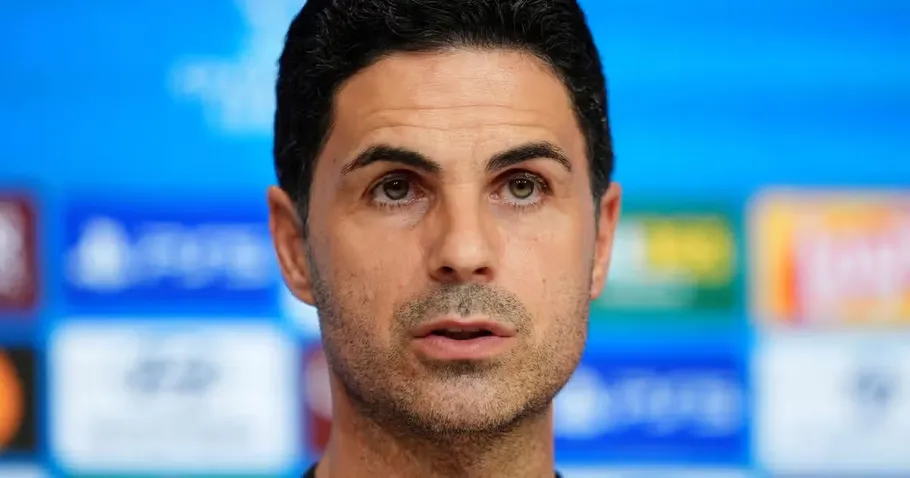
Mikel Arteta declined to engage with Graeme Souness’ criticism of Bukayo Saka when questioned before Arsenal’s Champions League visit to Bayern Munich, saying he had not heard the remarks. Souness had accused the winger of deliberately going to ground to obtain refereeing decisions during an appearance on Piers Morgan’s programme.
Arteta’s response on Tuesday evening was restrained rather than confrontational. He acknowledged that scrutiny comes with the job, stressed the importance of respectful debate and returned attention to Arsenal’s ambitions on the pitch. He did not offer a detailed rebuttal of the allegations.
What Arteta did — and did not — address
The reports agree on the substance of the exchange: Arteta was asked about Souness’ comments and then about the possibility that such criticism could influence perceptions of Saka. His answer to that second question was non-committal. He did not claim that referees had been affected, nor did he suggest that the pundit’s intervention would change his approach.
That distinction matters because a refusal to enter an argument is not the same as settling it. Arteta neither endorsed Souness’ assessment nor examined particular incidents to disprove it. Having said he had not heard the comments, he avoided constructing a response around someone else’s account of them.
The immediate effect was to deny the dispute a managerial escalation. Arsenal’s press conference remained a setting for acknowledging criticism, rather than becoming a forum for an extended argument about Saka’s conduct.
A serious allegation without an incident to test
Souness’ argument went beyond suggesting that Saka sometimes falls too easily. He described a broader sequence in which the winger goes down, team-mates appeal and a referee awards a foul after initially seeing little wrong.
That is an allegation about both individual behaviour and collective influence. However, the supplied accounts do not identify a particular match, challenge or refereeing decision against which that sequence can be assessed. They reproduce Souness’ interpretation without providing an incident-by-incident examination.
This leaves an important evidential gap. Whether a player has been fouled, exaggerated the effect of contact or simulated contact altogether requires scrutiny of the specific challenge. Those possibilities cannot reliably be collapsed into a single judgement about a player’s character.
Souness also presented simulation as a problem extending beyond Saka. That wider argument does not establish the narrower allegation against the Arsenal winger. A criticism of football’s incentives and an accusation against one player require different kinds of support.
Reputation is the unresolved issue
The follow-up question to Arteta raised the most consequential aspect of the story: whether repeated public claims could shape how Saka is judged. The reports provide no evidence that this has happened, and Arteta did not assert that it had.
There is nevertheless a useful distinction between discussing refereeing standards and assigning a player a fixed reputation. The former asks whether a decision was correct. The latter risks making future incidents appear to confirm a conclusion already reached.
That concern also cuts both ways. Saka’s status should not exempt his actions from examination, just as criticism from a prominent former player should not substitute for evidence. The fairest standard is to assess each incident independently, without treating either reputation or indignation as proof.
Arteta’s measured answer leaves that debate open. It also avoids inviting officials into a public dispute in which their future decisions might be interpreted through the controversy rather than the challenge itself.
Bayern provides the immediate football context
The timing explains why Arteta had little incentive to prolong the exchange. Arsenal were preparing for Wednesday’s match at the Allianz Arena, with Saka expected to have a significant role. Attention spent adjudicating a pundit’s general assessment would do little to clarify the immediate football task.
The Bayern Munich versus Arsenal prediction gives Arsenal a 42% chance of victory, a draw 41% and Bayern a 17% chance. Those estimates carry only 35% model confidence and are flagged as provisional because of conflicting inputs, so they offer limited grounds for firm conclusions about the contest.
They offer no evidence at all about Souness’ allegation. The central distinction remains between a forceful public judgement and a demonstrated pattern of behaviour. Arteta chose not to contest the former in detail; the reporting supplied does not establish the latter.