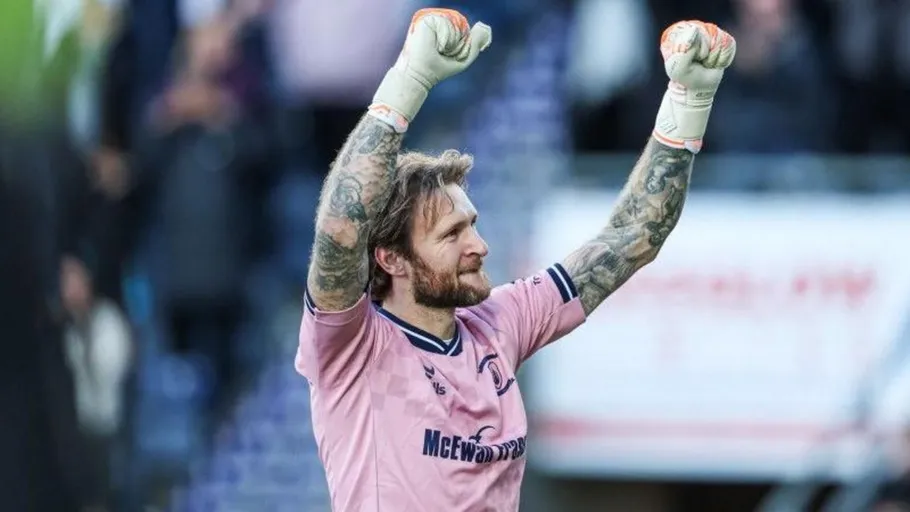
Scott Bain strengthened his claim for a Scotland opportunity with nine saves as Falkirk beat Celtic 2-0, securing their first victory over the Glasgow club in 19 years. Goals from Ethan Ross and Scott Tanser delivered the result, but Bain’s performance made the goalkeeper central to both the celebrations and the debate about his international prospects.
Falkirk’s fourth consecutive Premiership victory lifted them to fourth place. Their third successive clean sheet also extended their run without conceding to 342 minutes, giving Bain’s display a context beyond one exceptional afternoon against his former employers.
Manager John McGlynn’s backing has put a sharper question before Scotland head coach Sebastien Pocognoli: whether Bain should remain a squad option or receive a chance to challenge Angus Gunn for the starting position.
A compelling performance, not a complete selection argument
The reports agree on the essentials. Bain repeatedly frustrated Celtic, made important interventions in both halves and was especially busy after the interval. McGlynn’s assessment went beyond praising a good performance; he presented it as evidence that his goalkeeper deserves greater international responsibility.
There is, however, a distinction between strengthening a case and settling it. Nine saves demonstrate how much Bain contributed to this result. They do not, by themselves, establish that he is a better option than Gunn, who was preferred during Scotland’s recent international camp.
Neither account offers a detailed comparison of the two goalkeepers’ current performances or explains precisely what Pocognoli requires from the position. That limits how firmly this match can be translated into an international selection verdict.
The more persuasive argument for Bain is cumulative. He has four Scotland caps, was involved in the latest camp and is now sustaining a sequence of clean sheets while playing regularly. This was not an isolated audition from someone outside the national-team picture. It was a prominent performance from a goalkeeper already close enough to compete.
Why the early goal mattered
McGlynn’s account also helps explain the match beyond its outstanding individual display. Falkirk scored early, allowing them to protect an advantage rather than chase the game. That changed what was required from their goalkeeper: each save preserved a winning position and increased the value of their defensive work.
Yet the volume of Bain’s interventions matters when assessing how Falkirk won. A clean sheet can suggest that an opponent was comprehensively contained. Nine saves indicate that Celtic still found routes to goal, even if the supplied reports do not provide enough detail to judge the quality of every chance.
Both things can be true: Falkirk defended with commitment and organisation, while still needing their goalkeeper to rescue them at important moments. Giving Bain appropriate credit does not diminish the players in front of him; attributing everything to the defensive structure would understate his contribution.
Tanser’s involvement adds another useful detail. McGlynn highlighted that he had played relatively little, yet delivered a composed finish when selected. Alongside Ross’s goal and the work of the substitutes, that suggests a victory built on contributions across the side rather than simply resistance in the penalty area.
Regular football changes Bain’s position
Bain’s move away from a reserve role at Celtic is central to this story. According to reporting, he accepted a substantial reduction in earnings to pursue regular appearances. At Falkirk, those appearances have given him the platform to demonstrate qualities that are harder to assess from the bench.
His contract, extended in January until summer 2028 with an option for another year, also reflects the importance Falkirk place on him. For a goalkeeper turning 35 this month, the combination of club security and meaningful playing time offers a different basis for international consideration than reputation alone.
McGlynn has emphasised Bain’s composure and ability in possession as well as his saves. Those attributes could matter to Pocognoli, but the Celtic match chiefly supplied evidence of his shot-stopping. The reports do not establish how his distribution compares with Scotland’s alternatives or how it would function within the national side.
That leaves a measured conclusion. Bain has provided a strong reason for closer consideration, not an automatic entitlement to the shirt. For Falkirk, the benefit is already tangible: an experienced goalkeeper helped turn sustained pressure into a landmark victory. For Scotland, his performance makes the competition for places more credible.