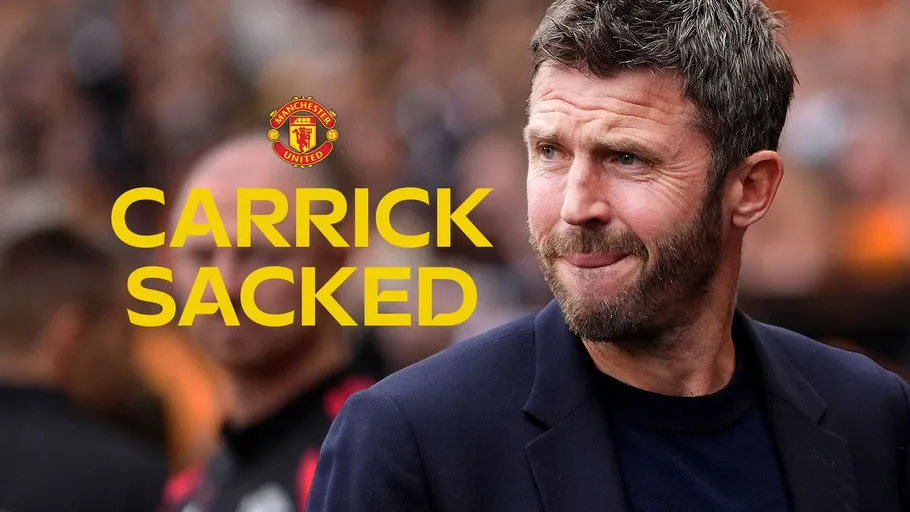
Manchester United dismissed Michael Carrick on Thursday, ending his permanent appointment less than six months after it began, with Mauricio Pochettino expected to replace him. United’s decision followed Sunday’s 4-4 draw against Aston Villa, which left them in the Premier League relegation places with one victory from their opening 10 matches.
The club confirmed Carrick’s departure while recognising his contribution to last season’s Champions League qualification. Multiple outlets reported that an agreement with Pochettino was in place, although his appointment had not been announced and arrangements with his current employer, US Soccer, remained to be completed.
The immediate question is whether a different coach can improve performances. The larger one is why United’s leadership moved so quickly from endorsing Carrick to deciding that he could no longer deliver their objectives.
From successful interim to early dismissal
Carrick took over from Ruben Amorim in January and won 12 of the final 17 league matches, taking United to third place. That recovery earned him a two-year contract in May, but its momentum did not survive the transition into this season.
Reports agree on the central sequence behind his dismissal. Heavy defeats against Como and Bournemouth intensified scrutiny, a loss at Chelsea deepened the problems, and a Champions League comeback against Roma provided only temporary relief. The Villa draw then offered another example of United’s ability to recover without demonstrating that they could control a match.
There are discrepancies in the published accounts of Carrick’s overall record, including different totals for his victories. Those figures should not be treated as interchangeable. The consistent and more relevant measure is United’s league return this season: one win in 10 was insufficient regardless of how his earlier spell is counted.
His successful interim tenure was evidence that he could improve this group. It was not proof that the improvement would endure under different demands. United’s appointment process needed to distinguish between those two propositions; the speed of the reversal suggests that assessment was either incomplete or overtaken by events.
Comebacks could not conceal the defensive problem
Against Villa, United conceded twice inside the opening four minutes, recovered, then allowed another pair of goals early in the second half. Late finishes from Joshua Zirkzee and Patrick Dorgu rescued a point.
That recovery matters because it complicates any simple claim that the players had stopped responding to Carrick. A side capable of fighting back against both Roma and Villa retained some competitive resolve. Yet resolve was repeatedly being spent repairing damage United had inflicted on themselves.
Reports state that United had not kept a league clean sheet this season. That makes defensive organisation the clearest immediate task for Carrick’s successor, rather than an abstract demand for greater intensity.
The distinction is important. A team can display effort while remaining poorly coordinated. Pochettino would need to establish whether the repeated concessions stem primarily from individual mistakes, the protection offered to defenders, or instructions that the squad cannot execute consistently. The supplied reporting establishes the symptoms more convincingly than the cause.
Pochettino agreement is not an appointment
According to multiple outlets, United reached an understanding with Pochettino while Carrick continued overseeing training. The decision to remove Carrick was approved following discussions in Monaco involving Sir Jim Ratcliffe and senior executives, with Jason Wilcox and Omar Berrada recommending the change.
Reports differ on the cost of releasing Pochettino from his United States contract. Some put the clause at £7 million; another gives a figure of $10 million, approximately £7.5 million. Until the terms are confirmed, neither sterling amount should be presented as settled.
Pochettino’s experience at Tottenham, Paris Saint-Germain and Chelsea gives United a candidate familiar with prominent clubs and demanding environments. It does not establish that the squad suits his methods, or that the recruitment structure can provide what he needs. Those are separate judgements from whether he is available and willing to come.
The hierarchy’s judgement is now on trial
The strongest disagreement across the coverage concerns responsibility. Reports describing the board’s thinking say executives believe the squad is substantially better than its performances suggest. Other analysis argues that inadequate recruitment left Carrick with problems a managerial change cannot resolve.
Both explanations could contain truth. Carrick remained responsible for organisation and selection; executives remained responsible for the resources and framework around him.
What is missing is a clear account of how United measured those competing failings before acting. If Pochettino arrives, his results will test more than his coaching. They will also test the leadership’s central claim: that this squad needs a different manager more urgently than it needs a different approach to building the team.