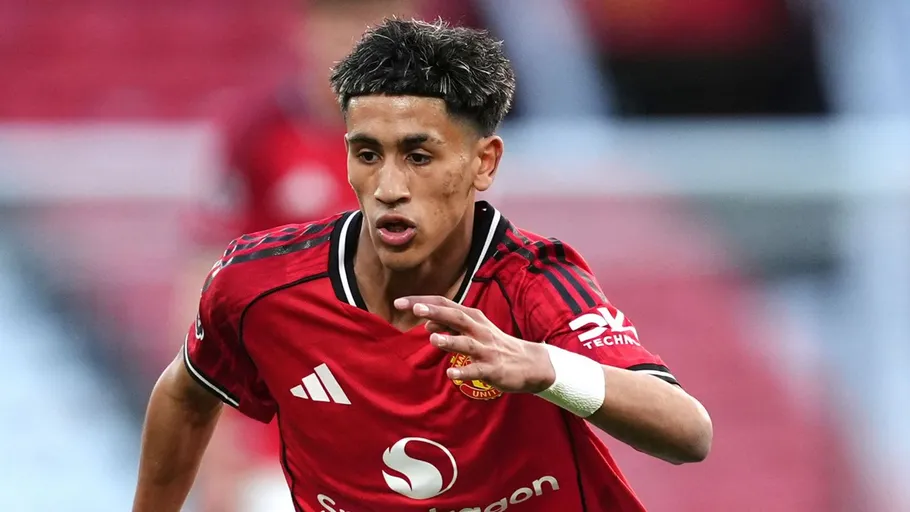
JJ Gabriel has moved closer to leaving Manchester United for Real Madrid, with multiple outlets reporting a verbal understanding between the Spanish club and the 16-year-old’s representatives. January is the reported target for his arrival, but neither a completed transfer nor an agreement between the clubs has been established.
The forward has been training independently in Spain after seeking to leave United in September. Madrid now appear to have moved ahead of Barcelona, Paris Saint-Germain and Bayern Munich, although the details of his release, registration and compensation remain unresolved publicly.
That distinction matters. Agreement over Gabriel’s preferred destination is not the same as confirmation that he can make the move on the proposed timetable.
Agreement with the player, questions between the clubs
The strongest point of agreement across the reports is that Madrid have made substantial progress with Gabriel’s camp without holding direct negotiations with United. Several accounts explicitly state that there has been no contact between the clubs.
The descriptions of Gabriel’s contractual position are less uniform. One report says he has submitted formal notice to cancel his registration. Another says his academy registration runs until the season’s end, while others describe United refusing an earlier request to release him immediately.
Those accounts do not establish that he is already free to join another club. Instead, they leave an important gap between the player’s decision to depart and the administrative process required to make that departure effective.
Reports also indicate that United would receive compensation, with a move abroad expected to produce a smaller payment than a switch to another Premier League club. An £8.5 million figure has circulated, but the supplied reporting does not establish it as an agreed sum. It should not be treated as the price of a completed transaction.
There is also potential for a dispute. According to reporting, United have considered legal action should a transfer proceed. That does not mean proceedings will follow, but it underlines why a verbal understanding cannot settle every aspect of this case.
A passport helps, but does not answer everything
Gabriel’s acquisition of a European Union passport is consistently presented as an important development in his ability to move to Spain at 16. The accounts differ on the family connection behind that eligibility: one identifies his mother’s Cypriot heritage, while another attributes eligibility to both parents.
The broader point is that his documentation appears to have improved the prospects of an overseas move. The reports do not, however, provide a definitive explanation of the registration process or confirm that all necessary approvals have been obtained.
For a player of his age, those details are substantive rather than procedural footnotes. The relevant test is not simply whether Madrid want him, but whether the proposed arrangement satisfies the requirements governing his transfer and registration.
Two different ideas of the right pathway
The disagreement at United appears to concern the pace of Gabriel’s progression as much as the destination of his next move.
Reports describe his representatives as dissatisfied with his first-team involvement. Accounts from United’s side maintain that the club had offered a route towards senior football while trying to manage his development carefully. Michael Carrick’s public response has emphasised the responsibilities involved in handling a young player’s welfare and exposure.
There is evidence of both opportunity and frustration. Gabriel featured in a senior pre-season friendly and was reportedly being considered for the September League Cup match against Brighton. Yet his camp wanted more immediate involvement, and he had stopped attending before that potential competitive appearance.
His hat-trick on his UEFA Youth League debut and recognition as last season’s Premier League Under-18 Player of the Season explain the attention. They do not, by themselves, resolve the separate question of when senior football would best serve him.
Madrid must offer more than a destination
Reports suggest Gabriel would initially play for Castilla and in the UEFA Youth League rather than move straight into Madrid’s first team. The accounts disagree over Castilla’s divisional status, describing it as playing in either Spain’s second or third tier. That detail remains inconsistent in the reporting.
More importantly, a reserve-team starting point complicates any simple portrayal of this transfer as an immediate route to elite senior football. It may offer a different development environment, but it is not evidence of guaranteed first-team minutes.
The unanswered question is what Madrid’s plan offers that United’s did not: a clearer progression timetable, a preferred coaching environment, or simply greater confidence from the family in the institution overseeing him.
Until that becomes clearer, this remains a significant recruitment development rather than a verdict on either academy. Gabriel appears to have chosen his direction. Turning that choice into a registered move—and then a sustainable playing pathway—is the work still ahead.