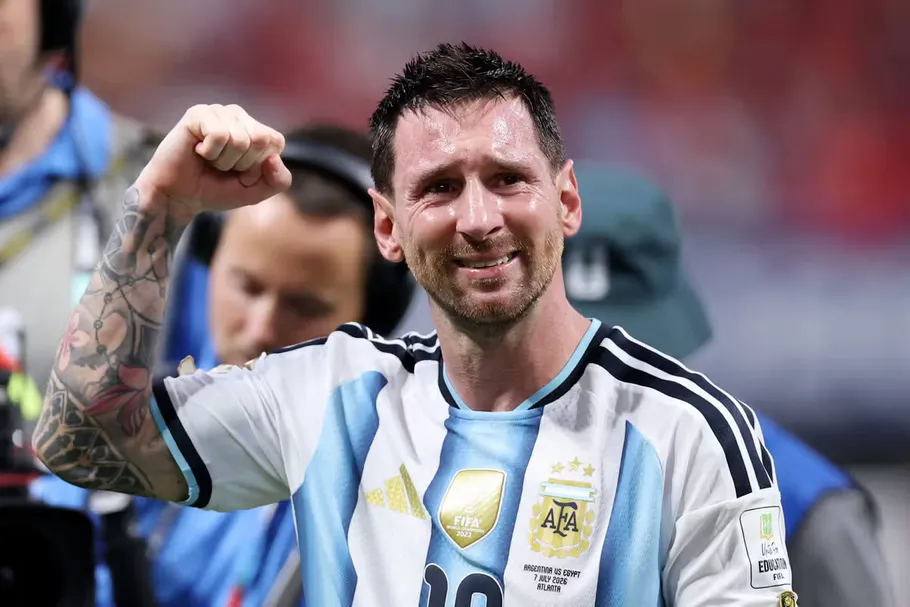
Lionel Messi has ended his Argentina career at 39, announcing his decision after the World Cup final loss to Spain and the recent death of his father, Jorge.
The Argentina captain said he had reached his conclusion two days after the 19 July final, which Spain won 1-0 after extra time through Ferran Torres. His retirement message was not made public immediately, however, and Messi explained that his father's death in August removed any remaining uncertainty about bringing his international career to a close.
A decision made before bereavement
The sequence matters. Messi's statement presents the World Cup defeat as the point at which he decided to step away, while the loss of his father reinforced that choice rather than initiating it. That distinction prevents the announcement being reduced to a response to a deeply personal tragedy alone.
Reports agree that Jorge Messi had been ill and that his son had already spoken of uncertainty over his wider playing future after the bereavement. But the retirement note also makes clear that the demands of trying to lead Argentina through another major cycle had become decisive. Messi described a painful acceptance that the moment had arrived, while pointing to younger players awaiting their opportunity.
There is a small discrepancy in reporting over the exact date of Jorge Messi's death, with accounts placing it on either 7 or 8 August. All outlets, though, place it after the final and after the retirement message was drafted on 21 July. The chronology is therefore clearer than the differing dates: a final defeat prompted the decision, and family loss solidified it.
Spain final exposed the physical question
Messi completed all 120 minutes against Spain and was visibly devastated at the final whistle. Argentina had been carried through difficult moments in the tournament by their captain, including knockout victories over England and Egypt, but the final supplied a harsher assessment of what another four-year international commitment might require.
He had played virtually every available minute on the way to the final, and subsequent comments reported after his father's death suggested he had pushed beyond his physical comfort zone in the decisive match. That is not an admission that he could no longer contribute at elite level; he remains active for Inter Miami. It does indicate that sustaining a World Cup campaign as Argentina's central figure was a different burden from club football.
Spain's path underlines the scale of the final obstacle. They finished the tournament unbeaten, winning six of their seven matches, and their eventual victory came only after Argentina had extended them into extra time. For Messi, the narrow scoreline should not obscure the larger calculation: another run at the 2030 World Cup would have taken him to 43, with no guarantee that Argentina could again reach the final stage.
An ending unlike 2016
This is not Messi's first international retirement. He briefly walked away after the 2016 Copa América final defeat to Chile, only to reverse course and return. That earlier episode came amid a run of near-misses, including the 2014 World Cup final, when the defining prize remained out of reach.
The context now is entirely changed. Messi leaves having led Argentina to the 2022 World Cup, ending the country's long wait for the trophy, and having helped deliver two Copa América crowns. The 2026 final defeat is a disappointment, but not a verdict on his international career. It instead closes a period in which Argentina moved from repeated final anguish to sustained success.
His record supplies the scale of the transition ahead. Messi finishes with 207 appearances and 125 goals, both Argentina records, after making his senior debut in 2005. He also exits as one of the most prolific players in World Cup history, with 21 goals across the competition. Numbers alone cannot explain his importance, but they show how much of Argentina's attacking identity was tied to a player who combined longevity with decisive moments.
Argentina's next challenge
The immediate question is not who can replicate Messi, because no single replacement can. It is whether Argentina can turn the depth Messi referenced into a more distributed leadership model. His departure removes their captain, leading scorer and principal creator at once, even if several of the players who shared the 2022 triumph remain available.
The final against Spain also offers a useful warning against simply preserving the old structure. Argentina remained capable of reaching another World Cup final, yet the physical and tactical load placed on Messi was exceptional. The next version of the side will need greater collective control and a clearer spread of responsibility rather than asking one veteran to solve every decisive phase.
Messi will continue his club career with Inter Miami, where his contract runs through 2028, so this is an international farewell rather than a full retirement. But for Argentina, the finality is unmistakable: the player who turned a long pursuit of global glory into reality will now follow the national team from outside the pitch.