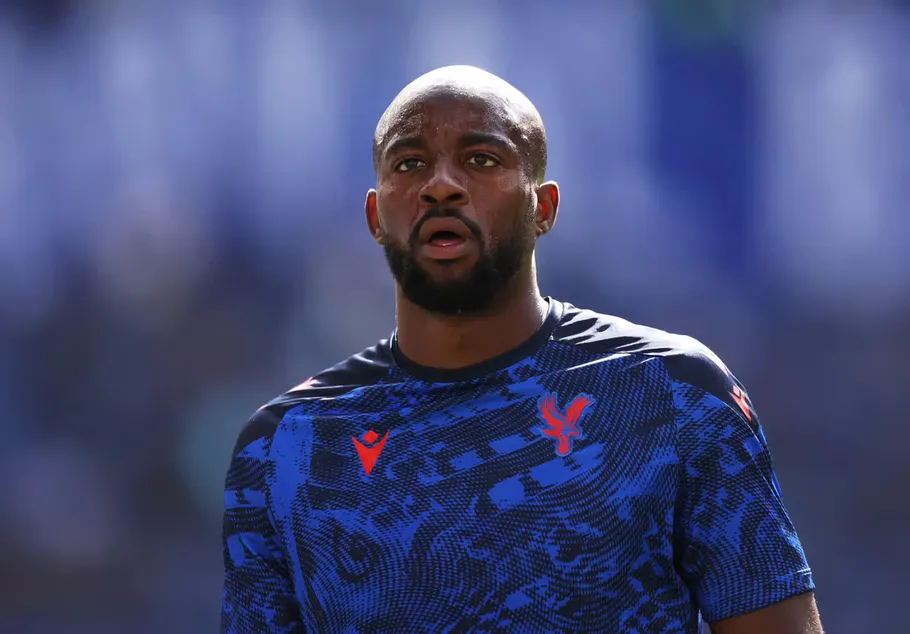
Pierre Sage has said he expects Jean-Philippe Mateta to remain a Crystal Palace player despite the striker’s dispute with the club over his contract. The Palace manager also moved to separate Ismaila Sarr’s absence from training from transfer speculation, insisting the winger is receiving treatment for a groin issue.
Sage’s assessment is significant because Mateta’s case is no longer simply a background contractual question. It has become public at a point when a player’s willingness to play, train and remain available can quickly become interpreted as a signal about an impending departure. The manager’s message was that he has seen no such signal from the forward in his daily work.
Sage draws a line between the player and the dispute
Multiple reports agree that Mateta challenged Palace’s use of a one-year extension clause, activated in 2024. The matter has been through a Premier League process, while one account also says an approach to FIFA did not proceed because it fell outside that body’s remit.
There is a slight difference in the reporting around the legal outcome. One report says the Premier League tribunal concluded that Mateta must see out the extended agreement; another focuses on the sequence of hearings and FIFA’s lack of jurisdiction without setting out the tribunal’s decision in the same terms. What is clear is that the disagreement concerns the contract rather than an allegation that Mateta has withdrawn his services.
That distinction is at the centre of Sage’s update. He has portrayed the striker as positive around the training ground and fully engaged in sessions, pointing to his recent selection from the start as practical evidence that there is no sporting breakdown. Sage also indicated that Mateta had only had a short period of training, suggesting the forward is still building physical sharpness rather than being treated as a player on the way out.
The manager’s confidence should not be confused with a final resolution of the contractual issue. Managers can speak directly to a player’s application and attitude, but the legal and administrative aspects remain for the club, representatives and relevant authorities. Sage’s remarks instead establish Palace’s immediate position: Mateta remains part of the first-team plan while the wider dispute continues.
Why the timing matters for Palace
A contract challenge can create uncertainty even when a player is available. It affects planning in several directions: the club must judge whether to build around the player, potential buyers must understand the status of any agreement, and the player’s camp may have a different view of his long-term position.
Sage has attempted to reduce the footballing uncertainty by making Mateta’s current role unambiguous. That matters more than a broad statement that a player is not for sale. By selecting him and describing his conduct as committed, Palace are signalling that the striker is being assessed on readiness and performance, rather than being isolated because of the disagreement.
There is, however, an unanswered question beyond the transfer window: whether a settlement or further legal clarity is required before all parties can move on. The reports do not establish what remedy Mateta is seeking, whether discussions are ongoing, or whether the dispute has any effect on Palace’s future contractual options. Sage’s optimism addresses the present, not necessarily every issue that could resurface later.
Sarr situation brings a separate complication
Sarr’s case has been discussed alongside Mateta’s, but it is materially different. The Senegal international has been linked with Liverpool and Galatasaray, while reports also suggest Galatasaray had an offer rejected. One outlet says Sarr’s representatives are open to a move and places Palace’s valuation at £60 million, although neither the club nor Sage has publicly confirmed a figure.
Reports in Turkey had suggested Sarr was declining to train amid the interest. Sage rejected that interpretation, saying the winger is working individually because of groin pain and that his return has taken longer than initially hoped. The manager acknowledged that transfer attention can unsettle players, their families and agents, yet maintained that Sarr’s rehabilitation should be viewed separately from the noise around him.
Sage’s reference to the three years left on Sarr’s contract also reveals a firmer negotiating position than in the Mateta case. Palace can point to a lengthy remaining deal, whereas Mateta’s disagreement is specifically about whether an additional year was validly triggered. The two situations may be dominating the same conversation, but the leverage, risks and likely solutions are not identical.
For now, Palace’s manager has given a consistent public account: Mateta remains committed despite his contract case, and Sarr is unavailable because of injury rather than protest. The coming period will test whether that calm internal picture can hold while legal questions and transfer interest continue outside the dressing room.