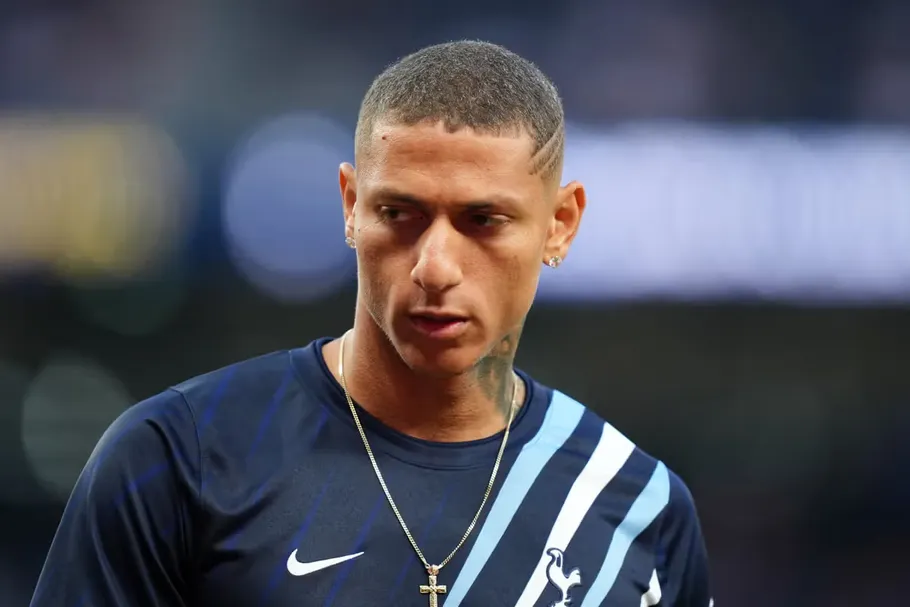
Richarlison has said he remains open to rejoining Everton, but has made clear that he will not be pushed into an exit from Tottenham on terms set by others.
The Brazil forward used social media to address an increasingly public transfer situation after Spurs head coach Roberto De Zerbi said the player had repeatedly expressed a wish to leave. Richarlison was omitted from Tottenham's squad for their 2-0 defeat to Newcastle, and his subsequent message amounted to a firm defence of his right to control the next move.
He indicated that an Everton return would appeal to him personally, describing the club as a place where he was especially happy. But he also stressed that an agreement must satisfy him as well as Tottenham, and said he remains available to Spurs while under contract.
A response to an unusually public standoff
The timing makes Richarlison's intervention significant. De Zerbi did not merely suggest that a move could suit all parties; he publicly identified Richarlison among players who had told him they wanted to depart. The coach's position was that any player seeking an exit needed to produce an acceptable financial arrangement for the club.
Richarlison's post did not directly name De Zerbi, Tottenham executives or Everton. Yet its message clearly challenges the idea that a player's desire to leave settles the matter. He portrayed himself as someone who has previously endured decisions being made around him, referring to pressure and retaliation, and asked for the same consideration that he believes he has shown Tottenham.
That creates an important distinction between wanting a transfer and accepting the version of it currently being discussed. Richarlison has not shut the door on Everton. If anything, he confirmed the emotional pull of returning. But his statement suggests that reported talks either moved faster than he was comfortable with or failed to account for his role in determining the terms.
Everton route complicated by Ndiaye developments
Reports agree that Richarlison's prospective return was connected, at least in the wider negotiating landscape, to Tottenham's interest in Everton attacker Iliman Ndiaye. They differ, however, on how far those discussions progressed.
One report said Everton had accepted a Tottenham offer for Ndiaye and that a separate Richarlison deal, involving a fee and potential add-ons, was being shaped alongside it. Other coverage described Tottenham and Everton as having held talks but said Manchester City then reached an agreement for Ndiaye. A further account said City were involved in the pursuit without confirming the final state of any deal.
The common thread is that Ndiaye's future has affected the backdrop to Richarlison's case. What remains unclear is whether the two transfers were ever formally dependent on one another, or simply running in parallel while both clubs explored options. That difference matters. If an Everton move for Richarlison was designed around a broader exchange of value, City's apparent intervention for Ndiaye could force both Spurs and Everton to rebuild the structure of their negotiations.
Richarlison's wording also points to a process issue rather than a straightforward rejection. He said the previous approach to talks would not continue, while leaving open the possibility of joining Everton if the clubs strike an agreement. There is no confirmation in the reports of an agreed personal contract, a completed transfer or a definitive breakdown.
Tottenham must separate squad planning from leverage
For Tottenham, the episode exposes the risks of allowing a transfer disagreement to become a public narrative. De Zerbi's exclusion of Richarlison from the Newcastle squad made the manager's view unmistakable, but the player's reply means the club now have to manage both a potential departure and an unsettled relationship with a senior forward.
Richarlison has said he will continue to make himself available. That is a meaningful qualification: he has not refused to play or declared that he will not remain. Tottenham therefore retain an experienced attacker who appears willing to fulfil his obligations, even if the current relationship is under strain.
Equally, the club cannot assume that his stated wish to leave gives them freedom to dictate a destination or package. A transfer needs consent from the buying club, selling club and player. Richarlison's post was effectively a reminder of that basic reality, delivered at a moment when the conversation had centred heavily on Tottenham's valuation and Everton's negotiations.
Everton, meanwhile, must decide whether a reunion remains practical independent of the Ndiaye situation. Richarlison's attachment to the club is evident, and his history there gives a return obvious sentimental appeal. Sentiment alone will not resolve wages, contract length, a transfer fee or Tottenham's willingness to sanction a departure.
With the deadline approaching, the next development is likely to reveal whether this was an attempt to reset negotiations or the first sign that a proposed return has become too complicated. For now, Richarlison has neither committed to leaving Tottenham nor withdrawn his interest in Everton. He has instead drawn a line around who gets to make the final call.