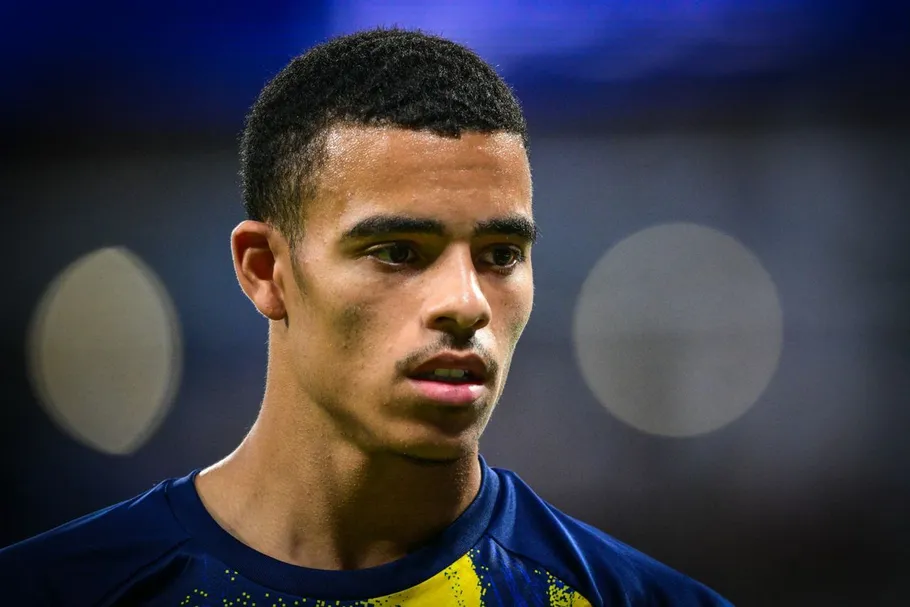
Fenerbahce have confirmed that UEFA has opened disciplinary proceedings involving Mason Greenwood, Matteo Guendouzi and the club after their Champions League play-off victory over Lyon.
The case follows a volatile conclusion to the August second leg in France, where Fenerbahce won 2-1 to complete a 3-2 aggregate success and reach the league phase. Greenwood and Guendouzi are each reported to be under examination for gestures directed towards the Lyon support, while the wider disorder involving players and staff could also be relevant to UEFA’s assessment.
Fenerbahce said they will submit their response and supporting material to the appropriate UEFA bodies. No punishment has yet been announced, and the confirmation of an investigation should not be confused with a finding of guilt or an automatic Champions League suspension.
A celebration became the central issue
The reports broadly agree that Guendouzi was at the heart of the flashpoint. The former Arsenal midfielder has a significant Marseille connection, making him an especially provocative figure in Lyon, and he appeared to acknowledge that hostility during and after the match. Accounts describe him responding to home supporters with obscene gestures and invoking Marseille after Fenerbahce had secured qualification.
Greenwood, who also previously played for Marseille, is reported to have made a separate obscene gesture in the direction of the stands. Both players later appeared together in a dressing-room image that attracted further attention. UEFA will need to distinguish between what happened in the stadium, any conduct caught by match officials and delegate reports, and material circulated after the final whistle.
That distinction matters. A disciplinary case can cover several different alleged offences, with sanctions dependent on the evidence, the precise regulation applied and whether UEFA regards conduct as provocative, insulting or bringing the competition into disrepute. The public statements so far do not set out the individual charges, meaning claims that either player is certain to be banned go beyond what has been confirmed.
Conflicting detail around the melee
There is less clarity over the confrontation as Guendouzi left the pitch. One account identifies Lyon goalkeeping coach Antonio Ferreira as the man who emerged near the tunnel and appeared to launch himself towards the midfielder. Another describes an angry intervention from a Lyon staff member without establishing the individual or the exact nature of the contact.
What is not disputed is that the situation escalated rapidly. Players, coaches and security personnel became involved as a crowd formed in the tunnel area, with footage said to show pushing and attempts to restrain those present. The differing versions are important because they underline why UEFA’s investigation cannot rest solely on social-media clips or partisan descriptions of the incident.
The disciplinary process may therefore examine conduct from more than one side, rather than treating the case solely as a question of Greenwood and Guendouzi’s celebrations. Fenerbahce’s statement confirms that the club itself is also subject to proceedings, but it does not reveal whether that relates to player behaviour, team responsibility, the post-match disorder or another matter contained in the official reports.
Context does not remove responsibility
Guendouzi has defended his conduct by saying that Lyon supporters repeatedly targeted members of his family before and during the match. Fenerbahce head coach Ismail Kartal has also publicly backed the midfielder and emphasised the unity of his squad during the confrontation.
Those explanations provide context for the player’s reaction, particularly given the intensity of the Lyon-Marseille rivalry. They do not, however, settle UEFA’s question. Competition authorities generally assess whether a player’s response crossed a disciplinary threshold, not simply whether provocation preceded it. Equally, any allegations of abusive crowd behaviour or inappropriate actions by opposition staff would be separate matters requiring their own evidence.
For Greenwood, the case carries a slightly different uncertainty. Reporting agrees he was involved in the aftermath and focuses on the alleged gesture towards supporters, but there is less detail about any direct role in the tunnel confrontation. UEFA’s eventual decision should clarify whether the two players face the same allegations or whether their cases have been grouped together because they arose from the same match.
Fenerbahce’s qualification has already been secured on the field. The outstanding issue is whether the manner of that celebration now affects the availability of Greenwood or Guendouzi in Europe, and whether UEFA identifies wider failings in an evening that ended far beyond a routine final whistle.