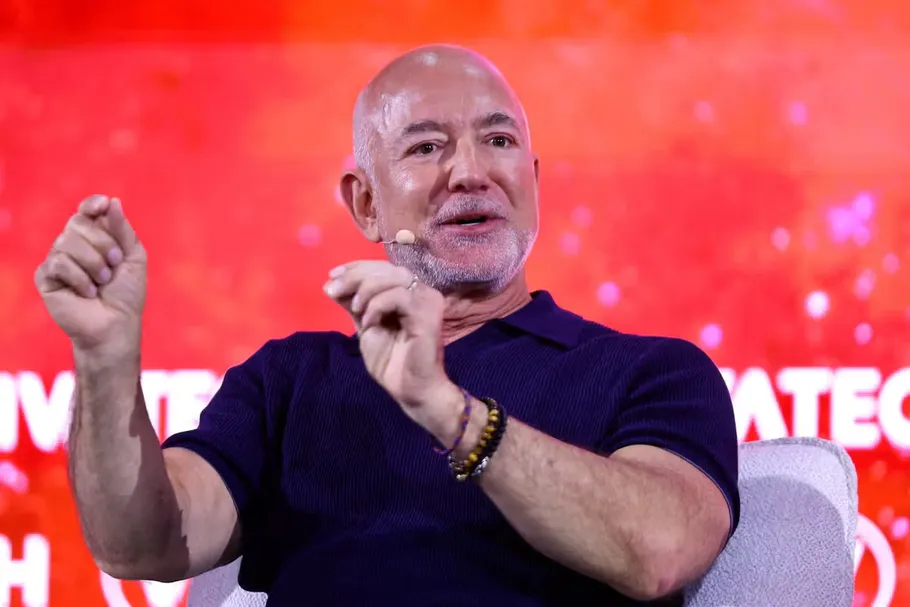
Reports on Wednesday indicated that Jeff Bezos is part of an investment group seeking to buy a 30% minority holding in Liverpool, in a transaction that could value the club at about £4.5bn.
The prospective group is led and represented by Amit Bhatia, the former Queens Park Rangers co-owner, and reportedly includes Facebook co-founder Eduardo Saverin. Fenway Sports Group has not confirmed that a deal has been agreed. Its most recent public position was that Bhatia's consortium had expressed an interest in a strategic minority investment.
For Liverpool, the significance lies less in Bezos's profile than in the structure of the proposed transaction. A sale of 30% would be a major change to the club's ownership make-up, but it would not necessarily change who controls its day-to-day direction.
FSG could retain control while releasing value
FSG bought Liverpool in 2010 for around £300m, at a difficult point in the club's financial history. The reported £4.5bn valuation illustrates the scale of the increase in value achieved during its ownership, helped by sporting success, commercial growth, the redevelopment of Anfield and investment in training facilities.
If the proposed investment is principally a sale of FSG shares, the incoming money would go to the current owners rather than directly into Liverpool's operating budget. That distinction matters. Headlines around the wealth of Bezos should not automatically be read as an indication of a dramatically enlarged transfer budget or a change in the club's established financial model.
Liverpool have already taken a smaller step in this direction. Dynasty Equity acquired a reported 3% interest in 2023. A 30% transaction would be substantially more consequential, however, because it would give a new investor bloc a far larger economic stake and could bring governance questions into sharper focus.
The central unanswered issue is what rights would accompany that stake. Minority investors can have limited involvement, but can also secure board representation, consent rights over major decisions or influence through shareholder agreements. The public information so far does not establish which, if any, of those arrangements are under discussion.
Wealth is not the same as football spending power
Bezos's resources make the story particularly striking. Multiple outlets noted that his personal wealth is vastly greater than Liverpool's annual revenues and that he could, in theory, afford to acquire the club outright. Yet the proposed deal is reported to concern a minority position, alongside other investors, not a takeover.
That means the immediate practical question is not how much money Bezos possesses, but whether the consortium would contribute capital to Liverpool and, if so, for what purpose. Investment could potentially support infrastructure, technology, global commercial activity or long-term projects. Equally, it could be structured primarily as an ownership transaction that leaves the club's available resources broadly unchanged.
Premier League financial rules also limit the simple notion that an ultra-wealthy shareholder can transform recruitment spending at will. Liverpool's capacity to spend remains closely tied to the revenues it generates and to compliance with the competition's cost controls. A new shareholder may strengthen the club's financial base or commercial reach, but it would not remove those constraints.
In that sense, a Bezos-linked stake could be more relevant to Liverpool's position as a global business than to immediate football operations. The club has a substantial following in the United States and already has strong international appeal. Investors from US technology, media and business backgrounds may see further room to develop partnerships, content, retail and overseas engagement around that global audience.
Supporters want clarity on stewardship
The response from Spirit of Shankly reflects why a transaction of this type will receive close scrutiny. The supporters' group has asked Liverpool for a meeting and for clarity on issues including boardroom influence, operational involvement and the due diligence conducted on the consortium.
That caution is shaped by Liverpool's experience under Tom Hicks and George Gillett, whose ownership ended with the FSG takeover. For many supporters, the ownership model is not a remote corporate matter; it affects ticketing, stadium decisions, club culture and the balance between commercial objectives and local identity.
Concerns also extend to Bezos's wider business record. Reporting has highlighted criticism of Amazon's labour practices and previous industrial action involving its UK workforce. Those issues do not determine what a Liverpool investment would look like, but they help explain why some fans are seeking assurances before welcoming a high-profile investor.
Bhatia's presence adds relevant football experience to the consortium, after 18 years associated with QPR. His departure from that club came shortly before the Liverpool reports emerged, a move that may be important given restrictions around significant interests in multiple teams. Nevertheless, he is the only reported member with a long operational history in football, making the division of responsibilities within the group another point requiring explanation.
A minority deal could be the first step, not the final one
There is no indication that FSG is actively pursuing a full sale. Liverpool chief executive Billy Hogan has previously said the ownership would consider investment where it assisted the club, while maintaining that there was no prospect of a complete disposal.
Still, a 30% stake would create a new relationship at the heart of the club. If an investment group and FSG worked well together, it could become a durable partnership; if circumstances changed, the arrangement could also provide a route towards a larger acquisition in future.
For now, the proposed deal remains defined by what has not been disclosed. The valuation underlines Liverpool's commercial strength, while the involvement of Bezos signals the enduring attraction of elite English clubs to global capital. Whether it becomes a positive development for Liverpool will depend on the terms of the investment, the control retained by FSG and the safeguards offered to supporters—not simply on the size of an investor's fortune.