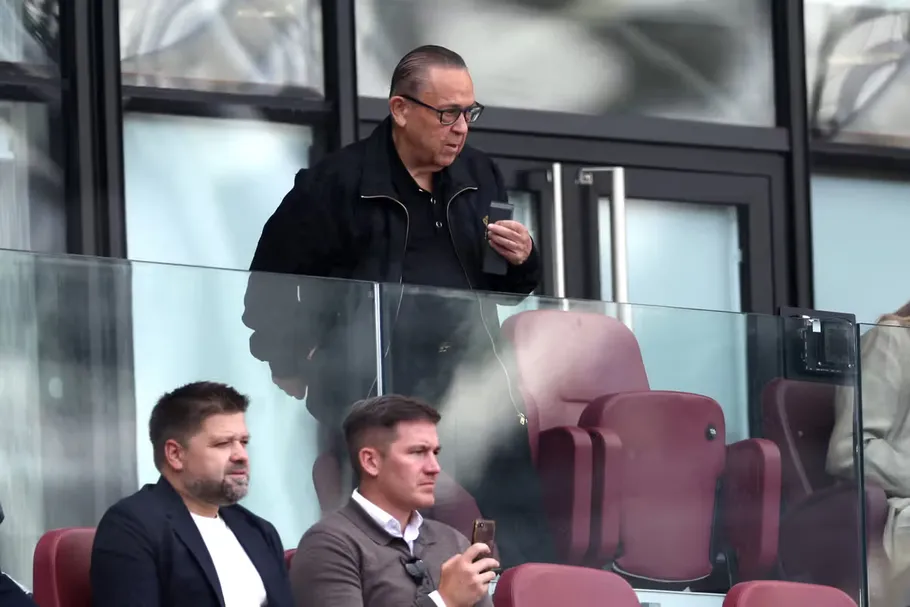
David Sullivan attended West Ham United’s home match at London Stadium despite the venue operator recommending that he should not be present because of concerns over potential supporter unrest.
The appearance came after Sullivan resigned as West Ham co-chair in June, following allegations from seven women of sexually exploitative and predatory behaviour. Sullivan has categorically denied the allegations. He remains the club’s largest individual shareholder, holding a 38.8% stake.
Reports ahead of the event indicated that West Ham expected Sullivan to attend. Subsequent reporting said he did so, with no apparent problems inside the stadium before or shortly after the start.
Stadium advice did not prevent attendance
London Stadium had told West Ham it recommended that Sullivan not attend home events. The operator also asked for advance warning of any visit, so it could put extra safety and operational measures in place.
That position underlined an important distinction in the situation: the stadium could advise the club and prepare its own operations, but the recommendation was not presented as a prohibition. Sullivan’s status as a major shareholder means his relationship with West Ham has not ended despite his departure from the co-chair role.
The episode therefore leaves the club managing two connected but separate issues. One is the immediate practical question of how public appearances by Sullivan are handled at the stadium. The other is the longer-term question of governance and ownership at a time when West Ham’s shareholder structure is in flux.
Safeguarding restriction remains a central issue
A joint BBC Panorama and Times investigation reported that Sullivan has been restricted from contact with West Ham’s women’s and youth teams for three years over safeguarding concerns. The reports said London Stadium had not known about the restriction until the investigation was published.
There is a difference between how that arrangement has been described. Reporting has referred to a Football Association ban, while Sullivan has disputed that characterisation. He has said it was a negotiated, temporary agreement linked to an outstanding anonymous historical complaint, and has maintained that the allegation was false.
That disagreement matters because it illustrates why the matter extends beyond a single attendance decision. The allegations, Sullivan’s denials and the safeguarding arrangement all carry implications for confidence in the club’s oversight, communication and accountability. West Ham must also navigate those questions in public, amid close attention from supporters and the wider football industry.
Shareholding keeps Sullivan influential
Resigning as co-chair removed Sullivan from one of the club’s most visible formal positions, but his 38.8% holding means he retains considerable influence. A large shareholder does not automatically control every club decision, yet the size of that stake ensures that any debate about West Ham’s direction cannot be detached from his continuing presence in the ownership group.
That is particularly relevant as other shareholders assess their positions. Vanessa Gold, daughter of the late former co-chair David Gold, has reached an agreement to sell her family’s 25.1% stake to a consortium led by Amanda Staveley, according to multiple outlets.
Reports have also outlined a potentially significant role for Daniel Kretinsky. After reducing his holding to below 25%, he could be eligible under West Ham’s pre-emption rules to buy the Gold family shares before an outside purchaser. Should that happen, reports suggest Kretinsky could become the club’s biggest shareholder without automatically being required to acquire the remaining shares.
Those possibilities remain distinct from Sullivan’s attendance at London Stadium, but they provide the broader context. Ownership transitions can reshape who has influence, how strategy is set and which figures supporters expect to represent the club publicly.
A test of West Ham’s off-field management
The absence of visible disorder on this occasion does not settle the underlying issue. It does, however, show that the club and stadium were able to stage the event without an immediate public flashpoint after the recommendation became known.
West Ham now face a continuing balancing act. The club must recognise Sullivan’s rights and influence as a shareholder while responding to concerns raised by the allegations and safeguarding reporting. It must also maintain clear working arrangements with London Stadium, whose responsibility for operations and safety has placed it at the centre of the discussion.
For supporters, the wider uncertainty is likely to remain as important as the individual appearance. The next phase will depend on whether ownership changes progress, how the club communicates its governance, and whether the respective roles of Sullivan, the board and the stadium operator become clearer.