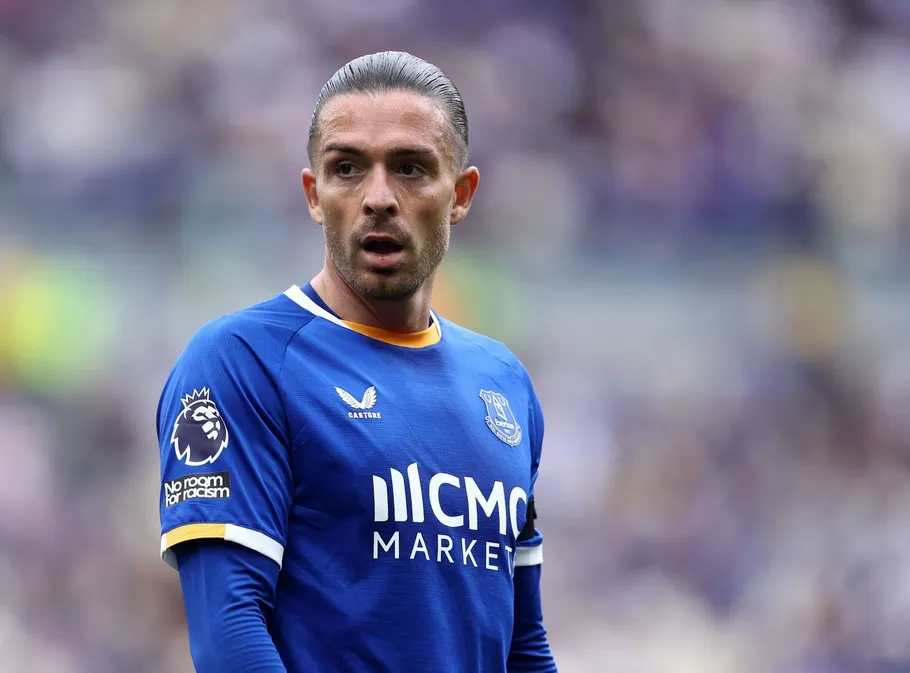
Jack Grealish was omitted from Everton’s squad for Thursday’s Carabao Cup meeting with Newcastle United following a disciplinary issue, with reports linking the decision to an unauthorised absence from training on Monday. David Moyes was reportedly angered by the incident, leaving the on-loan Manchester City midfielder facing questions about his standing at Everton.
The immediate consequence is clear: Grealish missed a match. The broader implications are less certain. Neither the circumstances behind the reported absence nor the conditions for his return are established in the supplied reporting. That distinction matters when assessing an episode already being presented as a verdict on his career.
What is established — and what remains unclear
The accounts agree that Grealish’s exclusion concerned discipline rather than a straightforward footballing selection. Multiple reports identify a missed training session as the trigger, while Moyes’ reaction has been described as particularly strong.
There is, however, a difference between reporting an absence and knowing why it occurred. The coverage does not establish Grealish’s explanation, whether there were mitigating circumstances or what discussions have taken place inside Everton.
Former Aston Villa teammate Gabby Agbonlahor acknowledged that uncertainty when discussing the incident, making his criticism conditional on the training reports being accurate. His suggestions that Grealish would apologise, receive a fine and return to contention were expectations, not confirmation of Everton’s disciplinary process.
Those limits should also apply to assessments of the manager. Leaving out a prominent player demonstrates that standards have consequences. It does not, by itself, establish that Moyes has lost faith in him permanently or that their working relationship cannot recover.
A disputed picture of his Everton spell
The reports differ in their assessment of what preceded this week’s setback. One describes Grealish’s initial Everton loan as a period of improvement under Moyes before injuries interrupted his progress. Another regards both loan spells as disappointing relative to the player he was at Villa.
Those interpretations are not entirely incompatible, but they use different benchmarks. A player can benefit from a change of environment without recovering the influence that once made him his team’s central attacking figure.
That distinction is important because the disciplinary story risks absorbing every other part of his recent career. Injury disruption, changing tactical responsibilities and a reported failure to attend training are separate issues. Treating them as one continuous explanation for decline makes for a simple narrative, but the available evidence does not support such certainty.
At Villa, Grealish carried an unusually large share of creative responsibility. At City, he operated within a different structure and contributed to the 2022/23 treble. Everton offered another setting and a renewed relationship with regular first-team football. None of those stages should be judged solely by how closely he resembled his younger self.
Why Moyes’ response matters beyond one player
For Everton, the central issue is consistency. If the reported absence was unauthorised, overlooking it because of Grealish’s reputation would risk weakening the standards applied to everyone else.
Equally, punishment and reintegration need not compete. A manager can impose a meaningful consequence while retaining a route back for the player. In practical terms, that may be more useful than allowing one disciplinary episode to become a prolonged public confrontation.
The loan arrangement adds another consideration. Everton must assess Grealish primarily through his contribution during the current spell, rather than any potential long-term transfer value. That gives the club reason to demand reliability, but also reason to restore a productive player once the matter has been addressed.
There is no evidence in the reports that Everton have decided to end that relationship. Nor is there confirmation of further sanctions. Any claim that this incident has already settled his future would go beyond what is known.
The next selection will offer only part of the answer
Everton face Newcastle again in the Premier League on Monday, making Moyes’ next squad an obvious point of scrutiny. Grealish’s inclusion would indicate that a return is possible; another omission would extend his absence without necessarily explaining it.
Selection alone will not reveal everything. Fitness, preparation and tactical choices can also shape a matchday squad. The more meaningful test will be whether Grealish can re-establish dependable involvement over the weeks that follow.
At 31, he has less room for another interrupted spell, but this episode does not justify assumptions about his private life or motivation. The reporting supports scrutiny of his professionalism over a specific alleged incident, not a diagnosis of his character.
Everton’s task is to uphold their standards and establish what comes next. Grealish’s is to demonstrate reliability through his actions. Until more is known, that is a firmer basis for judging the situation than declaring his career beyond repair.